
Looking to boost physical performance and mental sharpness in students? Agility drills for students are not just about running faster—they’re a game-changer for coordination, focus, and overall fitness. Let’s dive into powerful, science-backed routines that schools and coaches can implement today.
Why Agility Drills for Students Matter in Modern Education
Physical education has evolved beyond basic calisthenics and team sports. Today, agility drills for students are recognized as essential tools for developing motor skills, cognitive function, and emotional resilience. These drills go beyond athleticism—they support brain development, improve classroom behavior, and foster lifelong healthy habits.
Physical Benefits of Agility Training
Agility training enhances neuromuscular coordination, allowing students to respond quickly to stimuli. This translates into better balance, reduced injury risk, and improved athletic performance across sports like soccer, basketball, and track.
- Enhances muscle memory and reaction time
- Improves joint stability and proprioception
- Builds cardiovascular endurance through dynamic movement
According to research from the National Center for Biotechnology Information (NCBI), youth who engage in regular agility training show significant improvements in motor proficiency and physical literacy.
Cognitive and Behavioral Advantages
Agility isn’t just physical—it’s mental. Drills that require quick decision-making stimulate the prefrontal cortex, the brain region responsible for attention and executive function. This is especially beneficial for students with ADHD or those struggling with focus.
- Sharpens concentration and task-switching ability
- Reduces impulsivity through structured movement patterns
- Encourages discipline and goal-setting
“Movement is medicine for the brain. Agility drills create neural pathways that enhance learning and emotional regulation.” — Dr. John Ratey, Harvard Medical School
Top 10 Agility Drills for Students: A Complete Guide
Implementing agility drills for students doesn’t require expensive equipment or large spaces. The following 10 drills are classroom-friendly, scalable by age, and designed to maximize engagement and physical development.
1. Ladder Quick Steps
Using an agility ladder (or taped lines on the floor), students perform rapid foot movements to improve coordination and stride frequency.
- Instructions: Step in and out of each square with both feet, maintaining an upright posture
- Variations: In-in-out-out, lateral shuffles, high knees
- Duration: 3 sets of 20 seconds with 30-second rest
This drill is ideal for warming up before PE class and can be gamified with leaderboards to boost motivation.
2. Cone Zig-Zag Runs
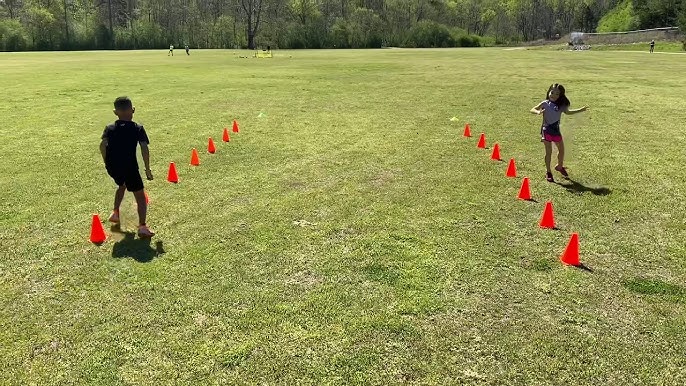
Set up five cones in a zig-zag pattern 2–3 feet apart. Students sprint through the cones, changing direction quickly.
- Focus: Sharp cuts, controlled deceleration, and acceleration
- Benefits: Builds sport-specific skills for soccer, football, and basketball
- Progression: Add a ball to incorporate hand-eye coordination
For younger students, reduce cone distance; for older ones, increase speed or add a reaction component (e.g., coach points direction).
3. Mirror Drill (Partner-Based)
Two students face each other, one leading with lateral and diagonal movements while the other mirrors them.
- Develops: Reaction time, spatial awareness, and teamwork
- Duration: 30 seconds per round, 3 rounds per pair
- Tip: Use music or a whistle to signal direction changes
This drill fosters social interaction and is excellent for inclusive classrooms with mixed ability levels.
How to Structure Agility Drills for Students by Age Group
Not all students are physically or cognitively ready for the same intensity. Tailoring agility drills for students by age ensures safety, engagement, and optimal development.
Elementary School (Ages 6–10)
At this stage, the focus should be on fun, basic motor skills, and following instructions. Agility drills for students in elementary school should feel like games.
- Use animal-themed movements (e.g., ‘frog jumps’, ‘crab walks’)
- Incorporate storytelling (e.g., ‘escape the lava’ with colored mats)
- Limit high-intensity intervals to 15–20 seconds
Example: The ‘Red Light, Green Light’ game teaches sudden stops and starts—key components of agility.
Middle School (Ages 11–14)
Students in this group are developing coordination and can handle more complex patterns. This is the ideal time to introduce formal agility ladders, cone drills, and partner exercises.
- Introduce sport-specific drills (e.g., basketball defensive slides)
- Teach proper landing mechanics to prevent injuries
- Encourage self-assessment and peer feedback
According to the American Academy of Pediatrics, adolescents need at least 60 minutes of moderate to vigorous activity daily—agility drills can be a fun part of that.
High School (Ages 15–18)
Older students benefit from advanced drills that simulate real-game scenarios. These agility drills for students can be integrated into sports training or PE fitness circuits.
- Include plyometric elements (e.g., box jumps with directional change)
- Use reaction-based cues (lights, sounds, hand signals)
- Track progress with timed runs or video analysis
High school athletes preparing for college sports can use these drills to improve draft prospects and reduce injury risk during competitive seasons.
Equipment Needed for Effective Agility Drills for Students
One of the greatest advantages of agility training is its low barrier to entry. Most drills require minimal or no equipment, making them ideal for schools with limited budgets.
Essential Tools
While creativity can replace many tools, a few basics enhance effectiveness and safety.
- Agility Ladder: Can be purchased or made with duct tape on gym floors
- Cones or Markers: Lightweight, visible, and easy to reposition
- Stopwatch or Timer App: For measuring performance and progress
- Whistle or Sound Cue: To signal starts, stops, or direction changes
For schools on a tight budget, SHAPE America offers grants and resources for physical education programs, including agility training kits.
DIY Alternatives
Don’t have access to commercial equipment? No problem. Teachers can improvise with everyday items.
- Use chalk on asphalt for outdoor ladder drills
- Replace cones with water bottles filled with sand
- Create zig-zag paths with colored tape on classroom floors
These low-cost solutions ensure that every student, regardless of school funding, can benefit from agility drills for students.
Integrating Agility Drills for Students into the School Curriculum
To maximize impact, agility training shouldn’t be limited to PE class. Schools can weave these drills into daily routines, after-school programs, and even classroom breaks.
PE Class Integration
Physical education teachers can structure weekly lessons around agility circuits. For example:
- Monday: Ladder drills and cone sprints
- Wednesday: Reaction-based mirror drills
- Friday: Timed agility challenge with peer scoring
This rotational model keeps students engaged and allows for skill progression over time.
Classroom Brain Breaks
Short bursts of movement improve focus and reduce fidgeting. Teachers can use 3–5 minute agility drills between lessons.
- ‘Jump to the Beat’ – Students hop side-to-side to a rhythm
- ‘Direction Dice’ – Roll a die to determine movement (left, right, forward, back)
- ‘Simon Says Agility’ – Combine commands with quick steps and stops
Studies show that students who take active breaks score higher on attention-based tasks, as reported by Edutopia.
After-School Programs and Sports Teams
Clubs and athletic teams can use agility drills for students as part of warm-ups, conditioning, or skill development.
- Soccer teams: Use cone dribbling drills with directional changes
- Basketball squads: Practice defensive slides and reaction sprints
- Track and field: Incorporate ladder drills for sprinters
Coaches should emphasize form over speed initially to prevent injuries and build confidence.
Measuring Progress and Success in Agility Training
To ensure that agility drills for students are effective, schools and coaches need to track progress. Quantitative and qualitative assessments help identify improvements and areas for growth.
Timed Performance Tests
Simple tests like the T-Test or 5-10-5 shuttle run provide objective data on agility improvements.
- T-Test: Measures forward sprint, lateral shuffle, and backpedal
- 5-10-5 Drill: Assesses quick directional changes from a central point
- Agility Ladder Speed: Counts steps per second through a 10-rung ladder
Administer these tests every 4–6 weeks to monitor development.
Observational Checklists
For younger students or non-competitive settings, teachers can use checklists to assess form, effort, and participation.
- Proper knee bend during cuts
- Controlled stops without stumbling
- Following instructions and staying on task
This qualitative approach supports inclusive evaluation and encourages growth mindset.
Student Self-Assessment and Feedback
Empowering students to reflect on their performance builds ownership and motivation.
- Use simple rubrics: ‘I can move quickly and safely’
- Encourage journaling: ‘What did I improve today?’
- Peer feedback: ‘My partner stayed low during turns’
When students see their progress, they’re more likely to stay engaged long-term.
Safety Tips and Injury Prevention in Agility Drills for Students
While agility training is beneficial, improper execution can lead to sprains, strains, or overuse injuries. Educators must prioritize safety to ensure a positive experience.
Warm-Up and Cool-Down Routines
Never start agility drills without a proper warm-up. Dynamic stretches prepare muscles and joints for explosive movements.
- Warm-Up: Leg swings, high knees, butt kicks, arm circles (5–10 minutes)
- Cool-Down: Static stretching for hamstrings, quads, calves, and hips
- Hydration: Encourage water breaks, especially in hot environments
A study published in Pediatric Exercise Science found that dynamic warm-ups reduce injury rates by up to 30% in youth sports.
Proper Technique and Form
Teach students to maintain a low center of gravity, bend knees during cuts, and avoid overstriding.
- Emphasize ‘stay on the balls of your feet’ for quick reactions
- Discourage crossing feet during lateral movements
- Use visual cues: ‘Pretend you’re a basketball defender’
Instructors should model correct form and provide real-time feedback.
Adapting for Different Fitness Levels
Not all students start at the same level. Differentiation ensures inclusivity and prevents discouragement.
- Slower pace or shorter distances for beginners
- Extra rest intervals for students with health conditions
- Verbal or visual cues for neurodiverse learners
Remember: the goal is progress, not perfection.
Real-World Success Stories: Schools Using Agility Drills for Students
Across the U.S. and globally, schools are reporting transformative results from integrating agility drills into daily routines.
Case Study: Lincoln Elementary, Ohio
This public school introduced 10-minute agility circuits during morning recess. Within one semester, teachers reported:
- 25% reduction in classroom disruptions
- 18% improvement in standardized test scores for physical fitness
- Higher student enthusiasm for PE
The principal credited the program with improving overall school climate.
Global Example: Singapore’s ActiveSG Program
Singapore’s national initiative includes agility training in primary school PE curricula. Students participate in ‘Fun to Play’ circuits that combine coordination, speed, and teamwork.
- Results: 92% of students meet national physical activity guidelines
- Program includes teacher training and parent engagement
- Drills are culturally adapted and inclusive
This model shows how government-supported programs can scale agility training effectively.
What are the best agility drills for beginners?
For beginners, start with simple, low-impact drills like two-foot jumps through a taped ladder, cone tapping (stepping to each side), or the ‘follow-the-leader’ mirror drill. Focus on form, not speed, and keep sessions under 15 minutes to avoid fatigue.
How often should students do agility drills?
Students should perform agility drills 2–3 times per week. This frequency allows for skill development without overtraining. Always include rest days to support muscle recovery and neural adaptation.
Can agility drills help with academic performance?
Yes. Research shows that physical activity, especially coordination-based exercises like agility drills, enhances blood flow to the brain, improves attention, and boosts memory. Schools integrating movement into the day often see better focus and behavior in class.
Are agility drills safe for all students?
When properly supervised and adapted, agility drills are safe for most students. Teachers should modify intensity for those with physical limitations and consult healthcare providers when necessary. Inclusive design ensures every student can participate meaningfully.
Do agility drills require special equipment?
No. While tools like ladders and cones help, agility drills for students can be done with minimal or no equipment. Chalk, tape, water bottles, or even painted lines on the floor work just as well—creativity is key.
Agility drills for students are far more than physical exercises—they are powerful tools for holistic development. From boosting coordination and speed to enhancing focus and confidence, these drills belong in every school’s toolkit. By implementing age-appropriate, safe, and engaging routines, educators can nurture healthier, sharper, and more resilient students. The evidence is clear: when students move with purpose, they learn with power.
agility drills for students – Agility drills for students menjadi aspek penting yang dibahas di sini.
Further Reading: