
Ever noticed how some students seem to move with grace while others trip over their own feet? It’s not just luck—it’s coordination. Discover 10 powerful coordination exercises for students that boost brain function, motor skills, and classroom performance.
Why Coordination Exercises for Students Are Essential
Coordination isn’t just about walking without bumping into things. For students, it’s a foundational skill that impacts everything from handwriting to sports and even cognitive development. Poor motor coordination can lead to frustration, low confidence, and academic struggles—especially in younger learners.
According to research by the American Academy of Pediatrics, children who engage in regular physical coordination activities show improved attention spans, better memory retention, and enhanced problem-solving abilities. These benefits stem from the brain-body connection that coordination exercises strengthen. When students practice movements that require timing, balance, and precision, they’re also training neural pathways critical for learning.
Moreover, coordination exercises for students are not limited to physical education. They can be seamlessly integrated into classroom routines, morning warm-ups, or even therapy sessions. Whether it’s catching a ball, balancing on one foot, or following a rhythmic pattern, these activities stimulate both hemispheres of the brain, promoting holistic development.
The Link Between Motor Skills and Academic Success
It might seem surprising, but fine and gross motor skills are closely tied to academic achievement. A study published in Frontiers in Psychology found that children with better hand-eye coordination scored higher in reading and math assessments. Why? Because writing, typing, and even using scissors require precise motor control, which directly affects how efficiently students can complete tasks.
For example, a student struggling with pencil grip may take twice as long to finish a writing assignment, leading to fatigue and reduced comprehension. By incorporating simple coordination exercises for students into daily routines, educators can help bridge this gap and support smoother academic progress.
- Fine motor skills involve small muscle movements (e.g., writing, buttoning clothes).
- Gross motor skills involve large muscle groups (e.g., running, jumping, balancing).
- Both are essential for classroom engagement and physical development.
How Coordination Impacts Cognitive Development
Coordination doesn’t just improve physical abilities—it enhances thinking. When students perform tasks that require them to coordinate movement with perception (like catching a ball while calling out a number), they engage executive functions such as working memory, attention control, and cognitive flexibility.
Neuroscientists refer to this as “embodied cognition”—the idea that physical movement influences thought processes. For instance, crossing the midline of the body (like touching the left hand to the right knee) activates communication between the brain’s left and right hemispheres, improving overall neural integration.
coordination exercises for students – Coordination exercises for students menjadi aspek penting yang dibahas di sini.
“Movement is the vehicle of thought.” – Dr. Carla Hannaford, neurophysiologist and author of ‘Smart Moves: Why Learning Is Not All in Your Head’
This means that coordination exercises for students aren’t just “fun breaks” from learning—they are active contributors to intellectual growth.
Top 10 Coordination Exercises for Students
Ready to boost your students’ coordination? Here are 10 powerful, research-backed exercises that are easy to implement in classrooms, gyms, or at home. Each activity targets different aspects of coordination—balance, timing, rhythm, and spatial awareness—while being fun and engaging.
1. Balancing Beam Walk (Indoor or Outdoor)
This classic exercise improves static and dynamic balance. Use a taped line on the floor, a low beam, or even a row of sticky notes to create a path.
Have students walk heel-to-toe along the line while keeping their arms out for balance. To increase difficulty, ask them to carry a small object on their head or turn around mid-path.
- Targets: Balance, focus, core stability
- Age group: 5–12 years
- Duration: 2–3 minutes per session
For more ideas on balance training, visit Verywell Family’s guide to balance activities.
2. Mirror Me Game
A fantastic way to develop visual-motor coordination and social engagement. One student leads with slow, deliberate movements (waving, clapping, touching toes), and the others mirror them exactly.
This exercise enhances attention, reaction time, and bilateral coordination (using both sides of the body together). It’s also great for building empathy and non-verbal communication.
- Targets: Visual tracking, imitation, motor planning
- Age group: 4–10 years
- Duration: 5–10 minutes
Variation: Use music to set the rhythm and make it more dynamic.
coordination exercises for students – Coordination exercises for students menjadi aspek penting yang dibahas di sini.
3. Ball Toss with Cognitive Tasks
Combine physical and mental challenges. Students stand in a circle and toss a soft ball to each other. But here’s the twist: before catching, they must answer a quick question (e.g., “What’s 7×8?” or “Name a synonym for ‘happy’”).
This dual-task exercise forces the brain to coordinate movement with cognitive processing, mimicking real-life multitasking scenarios.
- Targets: Hand-eye coordination, reaction time, working memory
- Age group: 6–14 years
- Duration: 8–10 minutes
Tip: Use a textured ball for better grip and sensory feedback.
4. Obstacle Course Challenge
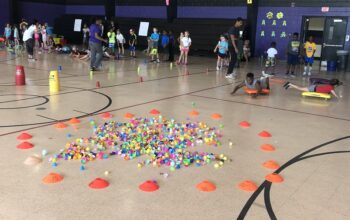
Create a simple obstacle course using cones, hula hoops, benches, and tunnels. Include crawling, jumping, balancing, and weaving tasks.
Obstacle courses are excellent for developing spatial awareness, agility, and sequential motor planning. They also encourage problem-solving as students figure out the most efficient way to navigate the course.
- Targets: Gross motor coordination, spatial reasoning, endurance
- Age group: 5–13 years
- Duration: 10–15 minutes
For inspiration, check out The Spruce’s obstacle course ideas.
5. Jump Rope Patterns
Jumping rope isn’t just cardio—it’s a complex coordination task. Introduce patterns like single jumps, double unders, criss-cross arms, or side-to-side hops.
These variations challenge timing, rhythm, and foot-eye coordination. For younger students, start with basic jumps and gradually increase complexity.
coordination exercises for students – Coordination exercises for students menjadi aspek penting yang dibahas di sini.
- Targets: Rhythm, timing, lower-body coordination
- Age group: 7–14 years
- Duration: 5–10 minutes
Group activity: Create a jump rope rhyme or song to maintain rhythm.
6. Finger Yoga (Fine Motor Coordination)
Perfect for classroom warm-ups or post-lunch resets. Finger yoga involves making specific hand shapes (like “snake,” “butterfly,” or “elephant”) using only finger movements.
This exercise strengthens fine motor skills crucial for writing and typing. It also calms the nervous system and improves focus.
- Targets: Finger dexterity, hand strength, concentration
- Age group: 5–10 years
- Duration: 3–5 minutes
Example sequence: Touch thumb to each fingertip in order (like playing piano), then reverse.
7. Simon Says with a Twist
Elevate the classic game by adding coordination challenges. Instead of “Simon says touch your nose,” try “Simon says hop on one foot while clapping three times.”
This version requires students to process auditory instructions, plan movements, and execute them precisely—exactly what they need for following multi-step directions in class.
- Targets: Listening skills, motor planning, inhibition control
- Age group: 4–9 years
- Duration: 5–8 minutes
Advanced level: Add cross-body movements (e.g., “touch left elbow to right knee”).
8. Rhythmic Clapping Games
Games like “Miss Mary Mack” or “Pat-a-Cake” combine rhythm, language, and hand coordination. These are especially effective for younger students and those with learning differences.
coordination exercises for students – Coordination exercises for students menjadi aspek penting yang dibahas di sini.
Rhythmic clapping improves bilateral coordination and auditory processing, both linked to reading fluency and language development.
- Targets: Auditory-motor synchronization, rhythm, social interaction
- Age group: 4–8 years
- Duration: 4–6 minutes
Research shows that children who engage in rhythmic activities perform better in phonological awareness tasks (source: NIH study on rhythm and reading).
9. Balance Board Activities
Use a wobble board or inflatable balance disc for seated or standing exercises. Students can sit on the board while writing, or stand on it while tossing a ball.
These tools activate core muscles and improve postural control, which is essential for sitting still and focusing during lessons.
- Targets: Core stability, vestibular system, attention
- Age group: 6–12 years
- Duration: 3–5 minutes
Classroom tip: Place balance boards at desks for fidgety students to use discreetly.
10. Cross-Crawl March
Have students march in place while touching their right hand to left knee, then left hand to right knee. This cross-body movement integrates both brain hemispheres.
Used in brain-based learning programs like Brain Gym®, the cross-crawl helps with reading, writing, and concentration by enhancing neural connectivity.
- Targets: Brain integration, coordination, focus
- Age group: 5–11 years
- Duration: 2–4 minutes
Pair with music for added rhythm and motivation.
coordination exercises for students – Coordination exercises for students menjadi aspek penting yang dibahas di sini.
How to Integrate Coordination Exercises for Students in the Classroom
You don’t need a gym or special equipment to implement coordination exercises for students. With a little creativity, these activities can become part of your daily routine—boosting focus without disrupting learning.
Start with Morning Warm-Ups
Begin the day with a 5-minute movement break. Try the cross-crawl march, mirror me game, or finger yoga. These activities wake up the brain and prepare students for focused learning.
Teachers report that morning coordination routines reduce fidgeting and improve on-task behavior. One elementary school in Oregon saw a 30% drop in disciplinary referrals after introducing daily movement warm-ups.
- Tip: Use a timer and upbeat music to keep energy high.
- Benefit: Sets a positive tone for the day.
Incorporate Into Transitions
Use coordination exercises as transition tools between subjects. For example, after math, do a quick round of rhythmic clapping before moving to reading.
Transitions are natural attention resets. Adding a motor task helps students mentally shift gears and reduces downtime.
- Example: “Before we start science, let’s do 10 seconds of balance on one foot!”
- Benefit: Minimizes off-task behavior during transitions.
Use as Brain Breaks
Every 30–45 minutes, give students a 2–3 minute brain break with a coordination activity. Research shows that short physical breaks improve attention and information retention.
A study from the University of Illinois found that children who took active breaks performed 13% better on attention tasks than those who remained seated.
“Physical activity is not a distraction from learning—it’s a catalyst.” – Dr. Charles Hillman, Cognitive Neuroscientist
Popular brain break options: ball toss, mirror me, or jump rope patterns.
coordination exercises for students – Coordination exercises for students menjadi aspek penting yang dibahas di sini.
Coordination Exercises for Students with Learning Differences
Students with ADHD, dyslexia, or developmental coordination disorder (DCD) often struggle with motor planning and timing. Coordination exercises can be especially beneficial for these learners, helping them build confidence and improve academic performance.
ADHD and Motor Regulation
Children with ADHD frequently have poor motor inhibition and coordination. Activities that require controlled movement—like balancing or rhythmic clapping—help regulate their nervous system.
For example, the cross-crawl march provides rhythmic input that calms the brain, making it easier to focus. Teachers can use these exercises as “reset tools” when a student appears hyperactive or distracted.
- Recommended: Balance board sitting, finger yoga, mirror me
- Frequency: 2–3 times per day
Dyslexia and Visual-Motor Integration
Dyslexia isn’t just about reading—it often involves challenges with visual-motor coordination. Exercises that strengthen eye-hand coordination, like ball toss or tracing patterns in the air, can support reading fluency.
One study found that dyslexic children who participated in a 6-week coordination program showed significant improvement in letter recognition and reading speed.
- Recommended: Mirror writing practice, ball tracking, sky writing (spelling words with arms)
- Benefit: Enhances visual tracking and sequencing skills
Developmental Coordination Disorder (DCD)
DCD affects up to 5% of school-aged children. These students may appear clumsy and struggle with everyday tasks like tying shoes or using cutlery.
Structured coordination exercises, delivered consistently, can dramatically improve their motor skills. Occupational therapists often use obstacle courses and balance training as part of intervention plans.
For resources, visit DCD Alliance, a global network supporting children with coordination challenges.
coordination exercises for students – Coordination exercises for students menjadi aspek penting yang dibahas di sini.
“Early intervention with coordination exercises can change a child’s life trajectory.” – Dr. Amanda Kirby, DCD expert
Measuring Progress in Coordination Skills
How do you know if coordination exercises for students are working? Use simple assessments to track improvement over time.
Simple Assessment Tools
You don’t need fancy equipment. Use observational checklists or timed tasks to measure progress.
- Balance test: Can the student stand on one foot for 30 seconds?
- Ball catch test: How many times can they catch a ball in 1 minute?
- Obstacle course time: Track completion speed and accuracy weekly.
Record results in a simple chart and celebrate improvements with students.
Student Self-Assessment
Empower students to reflect on their progress. Use smiley-face scales or simple journals where they rate their confidence in tasks like “writing neatly” or “catching a ball.”
Self-awareness builds motivation and ownership of learning. One teacher reported that students who tracked their own coordination goals practiced more at home.
Teacher Observation Checklist
Create a checklist with behaviors like:
- Follows multi-step movement instructions
- Moves smoothly between activities
- Participates in group motor games
- Shows improved handwriting stability
Review every 4–6 weeks to adjust activities as needed.
Benefits of Regular Coordination Practice
The advantages of coordination exercises for students extend far beyond physical agility. When practiced consistently, these activities create lasting improvements in multiple areas of development.
coordination exercises for students – Coordination exercises for students menjadi aspek penting yang dibahas di sini.
Improved Academic Performance
As mentioned earlier, coordination supports cognitive functions essential for learning. Students who engage in regular motor activities show better reading comprehension, math accuracy, and writing fluency.
A longitudinal study in Canada found that elementary students in schools with daily physical coordination programs scored 15% higher on standardized tests than peers in sedentary classrooms.
Enhanced Social Skills
Many coordination exercises are group-based, fostering teamwork, turn-taking, and communication. Games like mirror me or ball toss require students to pay attention to others, build trust, and cooperate.
For shy or socially anxious students, these activities provide a low-pressure way to engage with peers.
Greater Confidence and Self-Esteem
Nothing boosts confidence like mastering a new skill. When a student finally balances on one foot for 20 seconds or catches a ball three times in a row, they feel proud.
This sense of achievement spills over into academic and social domains, creating a positive feedback loop of success.
Common Mistakes to Avoid
While coordination exercises for students are highly beneficial, some common pitfalls can reduce their effectiveness.
Skipping Warm-Up and Cool-Down
Always begin with light movement (marching, arm circles) and end with stretching. This prevents injury and helps the brain transition smoothly.
coordination exercises for students – Coordination exercises for students menjadi aspek penting yang dibahas di sini.
Overloading Complexity Too Soon
Start simple. Don’t introduce a full obstacle course to kindergarteners on day one. Build skills progressively to avoid frustration.
Ignoring Individual Differences
Not all students will progress at the same rate. Adapt activities for physical limitations or learning needs. Offer modifications, not just challenges.
What are coordination exercises for students?
Coordination exercises for students are physical activities designed to improve the synchronization between the brain and body. They enhance balance, timing, rhythm, and motor control, supporting both physical and cognitive development.
How often should students do coordination exercises?
For optimal results, students should engage in coordination exercises 3–5 times per week for 5–15 minutes per session. Daily short bursts are more effective than weekly long sessions.
Can coordination exercises help with ADHD?
Yes. Coordination exercises that involve rhythm, balance, and controlled movement can help regulate the nervous system in students with ADHD, improving focus and reducing impulsivity.
coordination exercises for students – Coordination exercises for students menjadi aspek penting yang dibahas di sini.
Are these exercises suitable for all age groups?
Absolutely. Coordination exercises can be adapted for preschoolers, elementary, middle, and even high school students. The key is matching the activity to developmental level and interest.
Do coordination exercises require special equipment?
Not necessarily. Many effective exercises use minimal or no equipment—just space, a ball, or tape on the floor. Tools like balance boards or jump ropes can enhance activities but aren’t required.
Coordination exercises for students are more than just physical fun—they’re powerful tools for brain development, academic success, and emotional well-being. From simple classroom warm-ups to structured therapy activities, these exercises build essential skills that last a lifetime. By integrating just a few minutes of coordinated movement each day, educators and parents can unlock students’ full potential. Start small, stay consistent, and watch the transformation unfold.
Further Reading: