
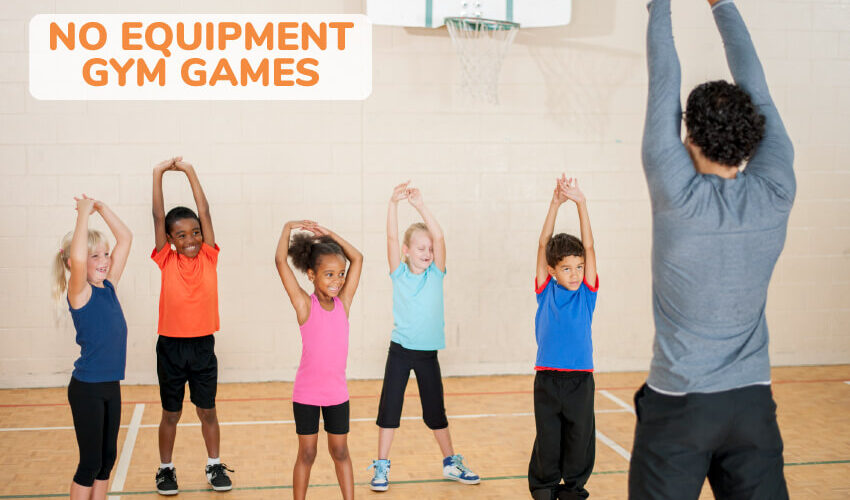
Looking for fun, effective, and completely equipment-free physical education games? You’re in the right place. These no-equipment PE games are perfect for classrooms, playgrounds, or even at home—boosting fitness, teamwork, and energy without spending a dime.
Physical Education Games No Equipment: Why They Matter

Physical education doesn’t require fancy gear or expensive tools. In fact, some of the most impactful physical education games no equipment are rooted in simplicity, accessibility, and universal play. These games break down barriers to participation, ensuring every student—regardless of socioeconomic background—can engage in meaningful physical activity.
Accessibility and Inclusivity
One of the greatest strengths of physical education games no equipment is their inclusivity. Schools with limited budgets, remote learning environments, or overcrowded classrooms can still deliver high-quality PE experiences. Without the need for balls, cones, or specialized gear, these games eliminate financial and logistical hurdles.
- Students from low-income families can participate equally.
- Teachers in underfunded schools can still deliver dynamic lessons.
- Games can be adapted for various physical abilities and learning needs.
According to the Centers for Disease Control and Prevention (CDC), regular physical activity improves concentration, classroom behavior, and academic performance. No-equipment games make this possible for all.
Promoting Creativity and Cognitive Development
When students aren’t relying on structured tools, they engage more creatively. Games that use only body movement and imagination stimulate cognitive functions like problem-solving, spatial awareness, and memory. For example, mimicking animal movements or creating human puzzles fosters both physical and mental agility.
“Physical activity is not just about fitness; it’s a gateway to cognitive growth, emotional regulation, and social bonding.” — Dr. John Ratey, author of ‘Spark: The Revolutionary New Science of Exercise and the Brain’
These no-equipment games often require students to think on their feet, follow complex instructions, and adapt quickly—skills that transfer directly to academic and life success.
Top 25 Physical Education Games No Equipment
This curated list of 25 physical education games no equipment is designed for versatility, fun, and maximum engagement. Whether you’re a PE teacher, classroom instructor, or parent, these activities can be played indoors or outdoors with minimal space and zero gear.
1. Freeze Tag
A timeless classic, Freeze Tag gets kids running, dodging, and strategizing. One player is ‘it’ and must tag others, who then freeze in place until a teammate tags them to unfreeze.
- Encourages cardiovascular activity.
- Teaches teamwork and spatial awareness.
- Can be modified with safe zones or time limits.
For variations and safety tips, check out PE Update, a trusted resource for PE professionals.
2. Mirror Me
In this coordination and focus game, students pair up. One leads with slow, deliberate movements (like waving arms or stepping side to side), and the partner must mirror them exactly.
- Improves motor skills and concentration.
- Builds non-verbal communication.
- Great warm-up or cool-down activity.
It’s especially effective for younger children developing body awareness.
3. The Human Knot
Students stand in a circle, reach across to grab two different hands (not adjacent), and then work together to untangle the ‘knot’ without letting go.
- Fosters teamwork and problem-solving.
- Encourages communication and patience.
- Low impact, suitable for all fitness levels.
This game is a staple in team-building workshops and is endorsed by organizations like Youth Work Praxis for its social-emotional benefits.
Physical Education Games No Equipment for Team Building
Team-building games are essential in physical education to foster cooperation, trust, and communication. These physical education games no equipment are designed to strengthen group dynamics while keeping students active.
4. Group Jump Rope (Imaginary)
Even without a real rope, students can simulate jump rope in unison. One student chants or claps rhythmically while others jump at the same time.
- Develops rhythm and timing.
- Encourages synchronization and group cohesion.
- Can be turned into a challenge: how long can the group jump together?
Add music or counting to increase engagement.
5. Line Up by Birthday
Students must line up in order of their birthdays without speaking. They use gestures, writing, or miming to communicate.
- Teaches non-verbal communication.
- Encourages strategic thinking.
- Promotes quiet collaboration.
This game is excellent for developing emotional intelligence and empathy.
6. Silent Ball
Students sit in chairs or on the floor. One person throws a ‘ball’ (imaginary) to another. If someone talks, drops the ball, or makes a bad throw, they’re out.
- Builds focus and self-control.
- Perfect for indoor or quiet classroom settings.
- Teaches listening and attention skills.
It’s a favorite among teachers for managing energy while maintaining discipline.
Physical Education Games No Equipment for Coordination and Agility
Coordination and agility are critical components of physical literacy. These physical education games no equipment enhance balance, reaction time, and body control—without requiring any tools.
7. Animal Walks
Students mimic the movements of animals—bear crawls, crab walks, frog jumps, snake slithers. Call out an animal and have them move across the space.
- Develops full-body strength and coordination.
- Engages core, arms, and legs.
- Highly imaginative and fun for young learners.
For structured lesson plans, visit SHAPE America, the national PE association.
8. Red Light, Green Light
A leader calls out ‘green light’ (move forward) or ‘red light’ (freeze). Anyone moving on red light is out or returns to start.
- Improves impulse control.
- Enhances listening skills.
- Great for teaching stop-and-go reactions.
Add ‘yellow light’ for slow motion to increase difficulty.
9. Simon Says
A classic command game where players only follow instructions that begin with ‘Simon says.’ If Simon doesn’t say it, and you move, you’re out.
- Boosts attention and auditory processing.
- Encourages quick decision-making.
- Can be adapted for stretching or fitness moves.
Use it to teach body parts, directions, or exercise routines.
Physical Education Games No Equipment for Strategy and Thinking
Physical education isn’t just about movement—it’s also a platform for mental engagement. These physical education games no equipment blend physical activity with critical thinking, logic, and planning.
10. Rock, Paper, Scissors Tag
Two players face off. On ‘go,’ they play rock-paper-scissors. The winner tags the loser and moves on to challenge someone else.
- Combines quick thinking with light physical activity.
- Keeps everyone engaged as challengers queue up.
- Encourages sportsmanship and fair play.
It’s a dynamic way to keep energy high without overexertion.
11. Steal the Bacon (Word Version)
Instead of a physical object, call out a category (e.g., ‘fruits’). Players assigned that category race to ‘steal the bacon’ (a spot in the middle) and return without being tagged.
- Reinforces vocabulary and categorization.
- Improves reaction time and sprinting.
- Can be tied to classroom curriculum (science, math, etc.).
This cross-curricular twist makes PE a learning extension.
12. The Floor is Lava
Students must navigate the space without touching the ‘lava’ floor. Use imaginary platforms, chairs, or taped zones as safe spots.
- Encourages creative movement and balance.
- Develops spatial reasoning.
- Highly adaptable for different age groups.
It’s a favorite in elementary schools and homeschool settings alike.
Physical Education Games No Equipment for Large Groups
Managing large groups can be challenging, but these physical education games no equipment are designed to keep dozens of students active, engaged, and organized—without chaos.
13. Tunnel Tag
Players who are tagged must freeze and form a tunnel with their arms. Other players must crawl through the tunnel to unfreeze them.
- Keeps the game going as more players get involved.
- Encourages physical interaction in a safe way.
- Great for outdoor fields or gymnasiums.
It prevents students from standing idle, a common issue in large-group games.
14. Blob Tag
Start with one ‘it’ player. When they tag someone, they hold hands and become a ‘blob.’ The blob grows as more players are tagged, making it harder to catch others.
- Ensures everyone eventually joins in.
- Creates a fun, growing chain of movement.
- Teaches cooperation and coordination in groups.
It’s a crowd favorite at school events and summer camps.
15. Musical Statues
Play music and have students dance. When the music stops, they must freeze like statues. Anyone moving is out or sits down.
- Combines music and movement.
- Improves balance and control.
- Easy to set up with a phone or speaker.
For music-based PE ideas, explore Classroom Playground.
Physical Education Games No Equipment for Small Spaces
Not all schools have gyms or playgrounds. These physical education games no equipment are perfect for tight classrooms, hallways, or indoor recess—maximizing movement in minimal space.
16. Chair Aerobics
Using chairs for support, students perform seated or standing exercises: arm circles, leg lifts, seated jumps, and torso twists.
- Suitable for limited mobility or health restrictions.
- Can be done in rows of desks.
- Great for rainy days or winter months.
Modify intensity based on age and ability.
17. Alphabet Exercise
Go through the alphabet, assigning an exercise to each letter (A = arm circles, B = bunny hops, C = jumping jacks, etc.).
- Reinforces letter recognition.
- Keeps kids moving and learning.
- Can be done in place or in small groups.
Perfect for K-3 classrooms integrating PE with literacy.
18. Wall Push-Up Circuits
Students face a wall and perform push-ups against it. Combine with other wall-based moves: wall sits, wall walks (for older kids), or wall taps.
- Builds upper body strength safely.
- No floor contact needed.
- Easy to supervise and manage.
It’s a smart alternative to floor exercises in unclean or crowded areas.
Physical Education Games No Equipment for Mindfulness and Cool-Down
Cool-down activities are just as important as warm-ups. These physical education games no equipment help students transition from high energy to calm focus, promoting emotional regulation and body awareness.
19. Yoga Story Time
Tell a short story that incorporates yoga poses: ‘The monkey climbed a tree (monkey pose), then saw a snake (cobra pose), then rested like a sleeping lion (lion’s breath).’
- Combines storytelling with movement.
- Encourages imagination and relaxation.
- Great for end-of-day or post-recess calming.
Resources like GoNoodle offer free guided movement videos.
20. Breathing Ball
Imagine holding a balloon. Inhale deeply as if blowing it up, raise hands overhead. Exhale slowly as if letting it deflate, lower hands.
- Teaches diaphragmatic breathing.
- Reduces anxiety and improves focus.
- Can be done seated or standing.
Especially helpful for students with ADHD or sensory sensitivities.
21. Mindful Walking
Students walk slowly in a line or circle, focusing on each step: ‘Lift, move, place.’ Add sensory cues: ‘Feel your feet on the floor, hear your breath.’
- Builds body awareness.
- Encourages present-moment focus.
- Reduces hyperactivity and impulsivity.
Backed by research on mindfulness in schools (Mindful Schools).
Bonus: 4 More Creative Physical Education Games No Equipment
Round out your toolkit with these innovative and lesser-known physical education games no equipment that spark joy and learning.
22. Speed Switch
Divide into teams with equal numbers. On ‘go,’ one player from each team runs to the opposite side and high-fives a teammate, who then runs back. Continue until all have switched.
- Builds team spirit and speed.
- Easy to organize with cones (imaginary) or lines.
- Can be timed for competition.
Great for PE stations or relay alternatives.
23. Shadow Tag
Instead of tagging bodies, players tag each other’s shadows. Best played in sunny outdoor areas.
- Teaches observation and positioning.
- Unique twist on traditional tag.
- Encourages strategic movement.
Perfect for science-integrated lessons on light and shadows.
24. Name Tag
Each student has a name. ‘It’ calls a name, and that person must run to a safe zone before being tagged.
- Reinforces name recognition.
- Builds community in new classes.
- Can be adapted with themes (e.g., superhero names).
Excellent for first-week icebreakers.
25. Human Bingo
Create bingo cards with physical actions (e.g., ‘can hop on one foot for 10 seconds,’ ‘can touch toes’). Students find peers who can do the task and get signatures.
- Promotes interaction and movement.
- Encourages goal-setting and self-awareness.
- Can be used as an assessment tool.
A fun way to assess physical literacy without testing.
What are the benefits of physical education games no equipment?
These games promote physical fitness, teamwork, creativity, and inclusivity. They require no budget, are easy to set up, and can be adapted for all ages and abilities. They also support cognitive and emotional development.
Can these games be used in classrooms?
Absolutely. Many of these physical education games no equipment are designed for small spaces and can be integrated into classroom breaks, indoor recess, or cross-curricular lessons.
How do I modify games for different age groups?
Simplify rules for younger children, increase complexity for older students. Adjust movement intensity, add cognitive challenges, or incorporate academic content to scale difficulty.
Are no-equipment PE games safe?
Yes, when supervised and played with clear boundaries. Emphasize safety rules, respect for personal space, and inclusive participation to ensure a positive experience.
Where can I find more resources on physical education games no equipment?
Check trusted sites like SHAPE America, GoNoodle, PE Central, and the CDC’s physical activity guidelines for schools.
Physical education games no equipment are more than just a backup plan—they’re a powerful, inclusive, and effective way to keep students active, engaged, and learning. From team-building challenges to mindfulness exercises, these 25 games offer something for every setting, age group, and goal. By embracing simplicity, educators can deliver rich, movement-based experiences that build not only strong bodies but also resilient minds and connected communities. So next time you’re short on gear or space, remember: all you really need is imagination, energy, and a willingness to play.
Further Reading: