
Staying fit doesn’t require a gym membership or fancy gear. Discover powerful physical activities at home no equipment needed—effective, simple, and perfect for any fitness level.
Why Physical Activities at Home No Equipment Are a Game-Changer

In today’s fast-paced world, finding time to hit the gym can feel impossible. That’s where physical activities at home no equipment come in as a revolutionary solution. These workouts eliminate barriers like cost, travel, and time, making fitness accessible to everyone, regardless of lifestyle or schedule.
Accessibility and Inclusivity
One of the biggest advantages of physical activities at home no equipment is their universal accessibility. Whether you live in a bustling city apartment or a remote rural home, you can start exercising immediately. No need for weights, treadmills, or resistance bands—just your body and motivation.
- Accessible to people of all ages and fitness levels
- Perfect for those with mobility or financial constraints
- Can be adapted for pregnant women, seniors, or rehab patients
According to the World Health Organization, adults should engage in at least 150 minutes of moderate-intensity physical activity weekly. Home-based workouts make meeting this goal easier than ever.
Cost-Effectiveness and Time Efficiency
Gym memberships can cost hundreds per year, not to mention commuting time and childcare logistics. Physical activities at home no equipment eliminate these burdens. You save money and time while gaining the same, if not better, health benefits.
- No monthly fees or hidden costs
- Workouts can be done in 10–30 minutes
- Flexible scheduling—morning, lunch break, or before bed
“The best exercise is the one you can stick to consistently. Home workouts remove friction, making consistency achievable.” — Dr. Michael Joyner, Mayo Clinic
7 Essential Physical Activities at Home No Equipment
Ready to transform your health? These seven foundational physical activities at home no equipment deliver maximum results with minimal setup. Each targets different muscle groups and fitness components like strength, endurance, flexibility, and balance.
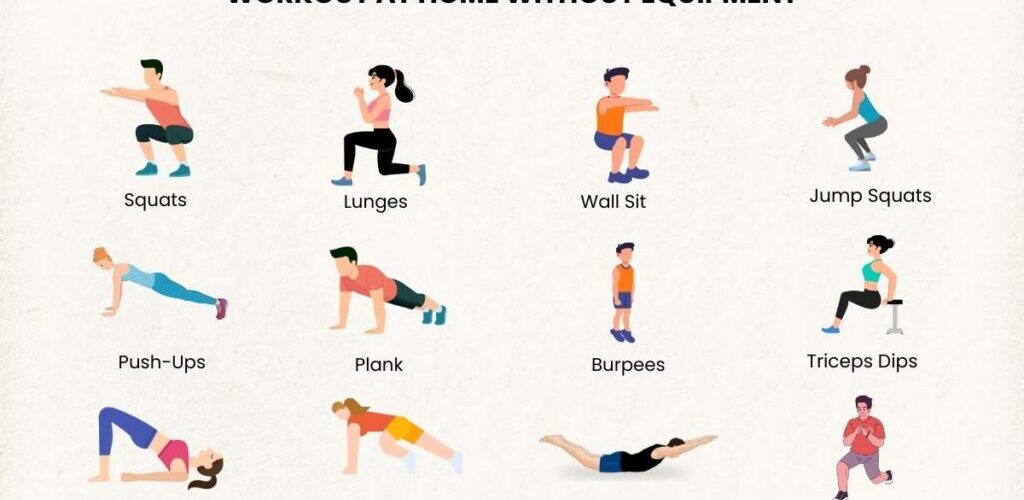
1. Bodyweight Squats
Squats are a powerhouse move that strengthens your glutes, quads, hamstrings, and core. They mimic everyday movements like sitting and standing, making them highly functional.
- Stand with feet shoulder-width apart
- Lower your hips back and down as if sitting in a chair
- Keep your chest up and knees over toes
- Push through heels to return to start
Do 3 sets of 15–20 reps. For added intensity, try jump squats or single-leg variations. Learn proper form from CDC’s guide on bodyweight exercises.
2. Push-Ups
Push-ups build upper body strength, targeting the chest, shoulders, triceps, and core. They’re scalable for all levels—start on your knees if needed.
- Begin in a plank position, hands under shoulders
- Lower your body until elbows are at 90 degrees
- Push back up with control
- Keep your back straight and core tight
Perform 3 sets of 8–15 reps. Modify by doing wall push-ups or incline push-ups on a sturdy table. Push-ups also improve cardiovascular endurance when done in quick succession.
3. Plank Hold
The plank is a core-strengthening staple. It engages your abs, obliques, lower back, and even shoulders and glutes. Unlike crunches, planks build functional core stability without straining the neck.
- Start in a forearm plank position
- Elbows under shoulders, body in a straight line
- Engage your core and glutes
- Hold for 20–60 seconds
Progress by increasing hold time or trying side planks. A study published in the Journal of Strength and Conditioning Research found that regular plank training significantly improves core endurance and posture.
Cardio-Focused Physical Activities at Home No Equipment
Cardiovascular health is crucial for longevity, weight management, and mental well-being. You don’t need a treadmill to get your heart pumping. These high-energy physical activities at home no equipment deliver excellent cardio benefits.
Jumping Jacks
Jumping jacks are a classic full-body cardio move. They elevate your heart rate quickly, improve coordination, and burn calories efficiently.
- Start standing with feet together, arms at sides
- Jump while spreading legs and raising arms overhead
- Jump back to starting position
- Repeat continuously
Do 3 sets of 30–60 seconds. For low-impact options, step side-to-side while raising arms. Jumping jacks are often used in HIIT (High-Intensity Interval Training) routines, which the Harvard Medical School praises for boosting metabolism and fat loss.
High Knees
High knees are a dynamic cardio drill that improves agility, coordination, and heart health. They also strengthen hip flexors and quads.
- Stand tall and run in place, bringing knees up to hip level
- Land softly on the balls of your feet
- Keep your core engaged and arms pumping
- Go as fast as possible for 30–60 seconds
Rest 30 seconds, then repeat for 3 rounds. This exercise mimics sprinting mechanics and can be part of a warm-up or main workout.
Mountain Climbers
Mountain climbers are a hybrid move—part cardio, part core workout. They increase heart rate while building abdominal strength and shoulder stability.
- Start in a high plank position
- Drive one knee toward your chest, then switch legs quickly
- Keep hips level and back flat
- Move as fast as possible with control
Perform 3 sets of 30–45 seconds. For beginners, slow the pace or step feet in instead of running. Advanced users can add a push-up every few reps for extra intensity.
Strength-Building Physical Activities at Home No Equipment
Contrary to myth, you don’t need weights to build muscle. Bodyweight resistance, when applied with proper technique and progressive overload, can lead to significant strength gains. These physical activities at home no equipment are proven to build lean muscle and improve functional strength.
Glute Bridges
Glute bridges activate the posterior chain—glutes, hamstrings, and lower back. They’re excellent for counteracting the effects of prolonged sitting and improving hip mobility.
- Lie on your back, knees bent, feet flat on the floor
- Lift your hips toward the ceiling, squeezing your glutes
- Hold for 2 seconds, then lower slowly
- Keep your shoulders and head on the floor
Do 3 sets of 15–20 reps. For added challenge, try single-leg glute bridges. Research from the National Institutes of Health shows that glute bridges improve pelvic stability and reduce lower back pain.
Triceps Dips (Using a Chair)
Triceps dips target the back of the arms, a common trouble area. Using a sturdy chair or bench, you can perform this move safely at home.
- Sit on the edge of a chair, hands gripping the edge
- Slide your hips off, supporting weight on hands
- Bend elbows to lower your body, then push back up
- Keep elbows pointing backward, not outward
Complete 3 sets of 10–15 reps. Avoid this exercise if you have shoulder issues. For a harder version, extend legs fully; for easier, keep feet closer.
Wall Sit
The wall sit is an isometric exercise that builds leg endurance and strength. It’s particularly effective for quads and glutes.
- Stand with your back against a wall
- Slide down until knees are at 90 degrees (or as close as possible)
- Hold the position, keeping back flat against the wall
- Hold for 30–60 seconds
Repeat 3 times. This exercise is often used in athletic training to build stamina. It’s also great for improving knee stability and joint health.
Flexibility and Balance: Often Overlooked Physical Activities at Home No Equipment
Fitness isn’t just about strength and cardio. Flexibility and balance are critical components of overall health, especially as we age. These physical activities at home no equipment enhance mobility, prevent injury, and improve posture.
Yoga Poses for Beginners
Yoga combines strength, flexibility, and mindfulness. Even 10 minutes a day can reduce stress and improve range of motion.
- Child’s Pose: Stretches back, hips, and thighs
- Downward Dog: Lengthens hamstrings, strengthens arms and shoulders
- Warrior I: Builds leg strength and balance
- Cat-Cow: Improves spinal flexibility
Hold each pose for 30–60 seconds. Follow guided sessions on platforms like Yoga Journal, which offers free routines for all levels.
Standing Balance Exercises
Balance declines with age, increasing fall risk. Simple balance drills can reverse this trend.
- Stand on one leg for 30 seconds, then switch
- Try closing your eyes for added difficulty
- Use a wall for support if needed
- Progress to heel-to-toe walking in a straight line
Do 3 rounds daily. These exercises are especially beneficial for older adults and those recovering from injuries.
Dynamic Stretching Routine
Unlike static stretching, dynamic stretching involves movement and is ideal before workouts to warm up muscles.
- Leg swings (front-to-back and side-to-side)
- Arm circles (forward and backward)
- Walking lunges with a twist
- Frankenstein walks (straight-leg kicks)
Perform 10–15 reps per side. Dynamic stretching increases blood flow and prepares your body for physical activity, reducing injury risk.
Creating a Sustainable Routine with Physical Activities at Home No Equipment
Knowing the exercises is one thing; sticking to them is another. The key to long-term success with physical activities at home no equipment is consistency, variety, and smart planning.
Designing Your Weekly Workout Plan
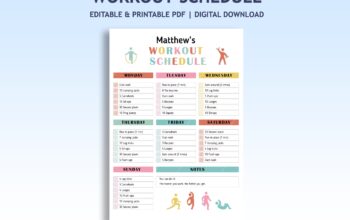
A balanced routine should include strength, cardio, flexibility, and rest. Here’s a sample weekly schedule:
- Monday: Full-body strength (squats, push-ups, planks)
- Tuesday: Cardio (jumping jacks, high knees, mountain climbers)
- Wednesday: Yoga and stretching
- Thursday: Lower body focus (glute bridges, wall sits)
- Friday: Upper body (push-ups, triceps dips)
- Saturday: Active recovery (walking, light stretching)
- Sunday: Rest
Adjust based on your goals and energy levels. The American Council on Exercise recommends varying intensity and exercise type to prevent plateaus.
Tracking Progress and Staying Motivated
Motivation fades, but systems endure. Use these strategies to stay on track:
- Keep a workout journal or use a fitness app
- Set SMART goals (Specific, Measurable, Achievable, Relevant, Time-bound)
- Take progress photos every 2–4 weeks
- Join online fitness communities for support
Remember, progress isn’t just about weight loss. Improved energy, better sleep, and increased strength are all wins.
Overcoming Common Challenges
Even the most motivated face obstacles. Here’s how to tackle them:
- Lack of space? Use a corner or clear a small area. Most exercises need only 4×4 feet.
- No time? Break workouts into 10-minute chunks. Three 10-minute sessions equal one 30-minute workout.
- Low motivation? Schedule workouts like appointments. Pair them with music or podcasts.
- Boredom? Rotate exercises weekly or follow online video routines.
“Consistency beats intensity. A 10-minute daily workout is better than a 60-minute weekly one.” — Fitness expert BJ Gaddour
Advanced Physical Activities at Home No Equipment for Next-Level Results
Once you’ve mastered the basics, it’s time to level up. These advanced physical activities at home no equipment increase difficulty through tempo, instability, and complexity—without adding equipment.
Plyometric Variations
Plyometrics use explosive movements to build power and speed. They’re excellent for athletic performance and calorie burn.
- Jump squats: Explode upward from the bottom of a squat
- Clap push-ups: Push up with enough force to clap hands mid-air
- Burpees: Combine squat, plank, and jump for a full-body blast
Do 3–5 sets of 8–12 reps. These are high-impact, so ensure you have good joint health and proper form.
Isometric Holds with Progression
Isometric exercises build strength by holding a position under tension. Progress by increasing time or reducing leverage.
- Plank to push-up: Transition from forearm plank to high plank
- Side plank with leg lift: Add instability by lifting the top leg
- Single-leg wall sit: Lift one foot off the ground during the hold
Start with 20-second holds and increase weekly. These drills improve muscular endurance and joint stability.
Bodyweight Circuits for Maximum Efficiency
Circuits combine multiple exercises back-to-back with minimal rest. They boost fitness fast and save time.
- Beginner Circuit: 30 sec squats, 30 sec push-ups, 30 sec plank, 30 sec rest. Repeat 3x.
- Intermediate: 40 sec each: jumping jacks, mountain climbers, glute bridges, wall sit. Rest 20 sec between rounds.
- Advanced: Burpees, jump squats, high knees, plank hold. 20 sec work, 10 sec rest (8 rounds).
These follow the Tabata protocol, proven to enhance aerobic and anaerobic fitness. Learn more at Today’s Dietitian.
Scientific Backing and Health Benefits of Physical Activities at Home No Equipment
These workouts aren’t just trendy—they’re backed by science. Regular engagement in physical activities at home no equipment leads to measurable health improvements.
Improved Cardiovascular Health
Bodyweight cardio exercises like high knees and jumping jacks elevate heart rate, improving circulation and lowering blood pressure. A 2020 study in BMJ Open Sport & Exercise Medicine found that home-based HIIT significantly improved VO2 max, a key marker of heart health.
Enhanced Mental Well-Being
Exercise releases endorphins, reducing stress and anxiety. The convenience of home workouts lowers the mental barrier to starting, increasing adherence. Research from American Psychological Association shows that even 10 minutes of daily exercise can improve mood and cognitive function.
Weight Management and Metabolic Boost
Bodyweight workouts increase calorie expenditure and build muscle, which raises resting metabolic rate. Combined with proper nutrition, they support healthy weight loss and maintenance.
- A 30-minute bodyweight session can burn 150–300 calories
- Muscle gained from resistance training burns more calories at rest
- HIIT workouts continue burning calories post-exercise (afterburn effect)
These benefits make physical activities at home no equipment a powerful tool for long-term weight control.
Can I build muscle with physical activities at home no equipment?
Yes, absolutely. Muscle growth (hypertrophy) occurs through progressive overload—increasing difficulty over time. With bodyweight exercises, you can achieve this by increasing reps, sets, tempo, or exercise complexity (e.g., moving from regular push-ups to plyo push-ups).
How often should I do these workouts?
Aim for at least 3–5 days per week. Include a mix of strength, cardio, and flexibility training. Allow at least one full rest day for recovery. Listen to your body—soreness is normal, but pain is a warning sign.
Are these exercises safe for beginners?
Yes, most physical activities at home no equipment are beginner-friendly. Start with low intensity and focus on form. If you have health concerns, consult a doctor before beginning any new exercise program.
Do I need any special clothing or space?
No special gear is needed. Wear comfortable, breathable clothing and supportive footwear (or go barefoot on a mat). You only need a small, clear area—about the size of a yoga mat.
Can I lose weight with just home exercises?
Yes, but weight loss requires a calorie deficit. Combine physical activities at home no equipment with a balanced diet. Exercise boosts metabolism and preserves muscle mass, making fat loss more sustainable.
Physical activities at home no equipment are a powerful, accessible, and scientifically supported way to improve your health. From basic squats to advanced circuits, these workouts fit any lifestyle and deliver real results. The key is consistency, proper form, and gradual progression. Start today—your body will thank you tomorrow.
Further Reading: