
Physical education classroom activities are more than just fun and games—they’re essential for building healthy habits, teamwork, and lifelong fitness. Discover 15 powerful, research-backed activities that transform PE into an engaging, dynamic experience for students of all ages.
Physical Education Classroom Activities: Why They Matter
Physical education (PE) is a cornerstone of holistic student development. Far from being just a break from academics, PE plays a critical role in shaping students’ physical, emotional, and cognitive well-being. When thoughtfully designed, physical education classroom activities can foster motor skill development, improve concentration, reduce stress, and promote social interaction.
Boosting Physical Health and Fitness
One of the most obvious benefits of physical education classroom activities is the promotion of physical health. According to the Centers for Disease Control and Prevention (CDC), regular physical activity in children and adolescents improves cardiorespiratory fitness, strengthens bones and muscles, and reduces the risk of obesity.
- Activities like running, jumping, and throwing enhance cardiovascular endurance.
- Bodyweight exercises such as squats and push-ups build muscular strength.
- Agility drills improve coordination and balance.
These foundational movements are best introduced early through structured yet playful physical education classroom activities. For example, a simple relay race isn’t just fun—it’s a full-body workout disguised as a game.
Enhancing Cognitive and Academic Performance
Research consistently shows a strong link between physical activity and improved academic outcomes. A study published in the Journal of School Health found that students who participated in regular PE classes demonstrated better focus, memory, and classroom behavior.
- Physical activity increases blood flow to the brain, enhancing neural connectivity.
- Team-based games improve problem-solving and strategic thinking.
- Following rules and sequences in games strengthens executive function.
“Movement is not a distraction from learning—it is a catalyst for it.” — Dr. John Ratey, Harvard Medical School
By integrating physical education classroom activities into the school day, educators create a synergistic environment where physical and mental growth go hand in hand.
Supporting Social and Emotional Development
PE provides a unique space for students to practice communication, cooperation, and conflict resolution. Unlike traditional classrooms, physical education classroom activities often require real-time collaboration, making them ideal for building emotional intelligence.
- Team sports teach students how to win and lose gracefully.
- Cooperative games reduce social anxiety and foster inclusion.
- Leadership roles in games build confidence and responsibility.
In an era where screen time often replaces face-to-face interaction, PE becomes a vital arena for developing interpersonal skills. Activities that emphasize teamwork over competition help create a positive classroom culture.
Top 15 Physical Education Classroom Activities for All Ages
Designing effective physical education classroom activities requires creativity, inclusivity, and a clear understanding of developmental stages. Below is a curated list of 15 powerful games and exercises suitable for elementary, middle, and high school students. Each activity is designed to be adaptable, safe, and aligned with national PE standards.
1. Parachute Play (Ages 5–10)
Parachute play is a classic physical education classroom activity that combines rhythm, coordination, and teamwork. Using a large fabric parachute, students work together to create waves, lift balls, and even crawl underneath.
- Promotes cooperative play and communication.
- Develops hand-eye coordination and timing.
- Can be modified for students with mobility challenges.
Teachers can integrate color recognition or counting by placing numbered or colored balls on the parachute and calling out instructions. This cross-curricular link enhances cognitive engagement.
2. Fitness Circuit Stations (Ages 8–14)
A fitness circuit is an excellent way to expose students to a variety of physical challenges in a structured format. Set up 6–8 stations around the gym or outdoor space, each focusing on a different skill or muscle group.
- Station 1: Jumping jacks (cardio)
- Station 2: Wall sits (endurance)
- Station 3: Hula hooping (coordination)
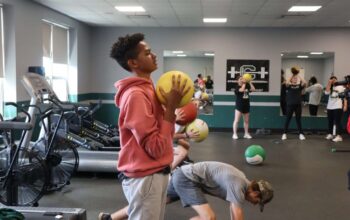
- Station 4: Medicine ball passes (strength)
Students rotate every 30–60 seconds, keeping their heart rate elevated. This format supports differentiated instruction—students can modify intensity based on ability. According to SHAPE America, circuit training in PE helps students develop personal fitness goals and self-monitoring skills.
3. Mirror Mirror (Ages 6–12)
This partner-based physical education classroom activity improves body awareness and reaction time. One student acts as the leader, making slow movements while their partner mirrors them like a reflection.
- Enhances kinesthetic awareness.
- Builds trust and non-verbal communication.
- Can be adapted into a group ‘mirror chain’ for larger classes.
After mastering basic movements, students can switch roles or increase complexity with dance sequences. This game is especially effective for students who are shy or struggle with coordination.
Inclusive Physical Education Classroom Activities for Diverse Learners
One of the greatest challenges in PE is ensuring that all students, regardless of ability, feel included and empowered. Inclusive physical education classroom activities are not just a best practice—they are a necessity for equitable education.
Adapting Games for Students with Disabilities
Physical education should be accessible to every student. Teachers can modify traditional games to accommodate various needs, including physical, sensory, and cognitive disabilities.
- Use adaptive equipment like Velcro catchers, beeping balls, or resistance bands.
- Allow seated participation in throwing or kicking games.
- Provide visual cues or simplified instructions for students with learning differences.
For example, in a game of ‘Bean Bag Toss,’ students in wheelchairs can participate by using a ramp or tossing from a seated position. The goal is participation, not perfection.
Culturally Responsive PE Activities
Physical education classroom activities should reflect the diverse backgrounds of students. Incorporating traditional games from different cultures not only broadens students’ horizons but also validates their identities.
- Play ‘Kabaddi,’ a popular tag game from South Asia.
- Introduce ‘Juego de la Rayuela,’ the Latin American version of hopscotch.
- Teach basic steps from African or Indigenous dances.
These activities foster cultural appreciation and global awareness. As noted by the United Nations Sustainable Development Goals, inclusive and culturally relevant education is key to building peaceful, equitable societies.
Gender-Inclusive Team Structures
Traditional team sports often reinforce gender stereotypes. To promote equity, physical education classroom activities should avoid gender-based team divisions and instead use mixed-gender or skill-based groupings.
- Use random assignment (e.g., colored wristbands) to form teams.
- Emphasize cooperation over competition.
- Encourage all students to try different roles, such as referee or coach.
This approach helps dismantle biases and creates a safer, more welcoming environment for all students, including those who are gender non-conforming.
Technology-Enhanced Physical Education Classroom Activities
Gone are the days when PE meant only balls and whistles. Today’s physical education classroom activities can leverage technology to enhance engagement, track progress, and personalize learning.
Using Fitness Trackers and Apps
Wearable devices like Fitbits or pedometers can turn physical education classroom activities into data-driven experiences. Students can set step goals, monitor heart rate, and reflect on their progress.
- Encourages self-assessment and goal setting.
- Provides real-time feedback on effort and intensity.
- Supports STEM integration through data analysis.
For example, students can record their steps during a ‘Walk the World’ challenge, where each mile walked unlocks a new country on a classroom map. This interdisciplinary approach makes fitness fun and educational.
Interactive Video Games and Exergaming
Exergaming—video games that require physical activity—has gained traction in PE programs. Platforms like Nintendo Switch’s Ring Fit Adventure or Xbox Kinect games blend gaming with exercise.
- Appeals to tech-savvy students who may be reluctant to join traditional sports.
- Offers low-impact options for students with joint or mobility issues.
- Can be used for indoor PE during bad weather.
While not a replacement for outdoor play, exergaming is a valuable supplement. A study in the Journal of Science and Medicine in Sport found that exergaming significantly increased moderate-to-vigorous physical activity in children.
Virtual Reality (VR) and Augmented Reality (AR) in PE
Emerging technologies like VR and AR are beginning to appear in physical education classroom activities. VR fitness programs can simulate environments like hiking trails or dance studios, while AR apps overlay digital elements onto real-world spaces.
- Creates immersive experiences that boost motivation.
- Allows for safe practice of high-risk activities (e.g., rock climbing).
- Can simulate sports scenarios for skill development.
While cost and accessibility remain barriers, pilot programs in schools show promising results in student engagement and adherence to physical activity guidelines.
Assessment and Evaluation in Physical Education Classroom Activities
Assessing physical education classroom activities goes beyond counting laps or scoring goals. Effective evaluation should measure skill development, effort, knowledge, and personal growth.
Formative vs. Summative Assessment
Teachers should use a mix of formative (ongoing) and summative (end-of-unit) assessments to gauge student progress.
- Formative: Observation checklists, peer feedback, self-reflection journals.
- Summative: Skill demonstrations, fitness tests, written quizzes on health concepts.
For example, during a basketball unit, a teacher might use a rubric to assess dribbling technique (formative) and then administer a final skills test (summative).
Student Self-Assessment and Goal Setting
Empowering students to assess their own performance fosters ownership and motivation. Tools like fitness logs, goal charts, and reflection prompts help students track their journey.
- Students set SMART goals (Specific, Measurable, Achievable, Relevant, Time-bound).
- Regular check-ins allow for adjustments and celebrations of progress.
- Portfolios can showcase growth over time.
According to Edutopia, self-assessment in PE improves intrinsic motivation and long-term adherence to physical activity.
Using Rubrics and Digital Portfolios
Digital tools like Google Forms, Seesaw, or PE-specific platforms (e.g., PhysEd Games) allow teachers to create standardized rubrics and store student work.
- Rubrics can assess motor skills, teamwork, and effort.
- Videos of student performance enable detailed feedback.
- Parents can access progress reports, increasing transparency.
This data-driven approach ensures that physical education classroom activities are not only fun but also academically rigorous and accountable.
Physical Education Classroom Activities for Different Age Groups
Developmental appropriateness is key when designing physical education classroom activities. What works for kindergarteners may not engage high schoolers. Below is a breakdown by age group.
Early Elementary (K–2): Play-Based Learning
Young children learn best through play. Physical education classroom activities should focus on fundamental movement skills like running, jumping, balancing, and throwing.
- Animal walks (bear crawl, frog jump) build strength and coordination.
- Obstacle courses develop spatial awareness.
- Freeze dance enhances listening skills and rhythm.
Games should be short, simple, and highly visual. Repetition is encouraged to reinforce motor patterns.
Middle Grades (3–6): Skill Development and Teamwork
As students grow, they can handle more complex rules and strategies. This stage is ideal for introducing sport-specific skills and cooperative challenges.
- Modified sports (e.g., 4-square, floor hockey) teach game sense.
- Cooperative relays emphasize teamwork over winning.
- Fitness challenges (e.g., ‘Plank Challenge’) build endurance.
Teachers should emphasize effort and improvement rather than competition.
Secondary (7–12): Fitness, Leadership, and Lifelong Skills
Older students benefit from activities that promote independence, leadership, and lifelong fitness habits.
- Student-led fitness circuits or yoga sessions.
- Outdoor education (hiking, orienteering).
- Peer teaching and officiating roles.
At this level, physical education classroom activities should connect to real-world applications, such as stress management through exercise or understanding nutrition.
Safety and Best Practices in Physical Education Classroom Activities
Safety is paramount in any PE setting. A well-planned environment minimizes risks and ensures that all students can participate with confidence.
Creating a Safe Physical Environment
The layout of the gym or outdoor space should be free of hazards and clearly marked for different activities.
- Ensure equipment is age-appropriate and in good condition.
- Use cones, tape, or mats to define boundaries.
- Inspect playing surfaces for cracks, wet spots, or debris.
Proper supervision is essential—teachers should be positioned to see all students at all times.
Teaching Safety Rules and Procedures
Students must understand and follow safety protocols to prevent injuries.
- Review rules before each activity (e.g., no pushing in relay races).
- Teach proper techniques for jumping, landing, and throwing.
- Encourage students to report injuries or discomfort immediately.
Role-playing scenarios (e.g., ‘What do you do if someone falls?’) help reinforce safety awareness.
Emergency Preparedness and First Aid
All PE teachers should be trained in CPR and first aid. A well-stocked first aid kit and emergency action plan are non-negotiable.
- Know the location of AEDs and emergency exits.
- Establish communication protocols with the school nurse.
- Conduct regular emergency drills (e.g., for heat exhaustion or cardiac events).
Prevention is key, but preparedness saves lives.
Integrating Physical Education Classroom Activities Across the Curriculum
Physical education doesn’t have to exist in isolation. When integrated with other subjects, physical education classroom activities become even more powerful.
PE and Math: Movement with Measurement
Combine physical activity with math concepts to create cross-curricular learning.
- Measure distances in long jump and calculate averages.
- Count repetitions and graph progress over time.
- Use angles to analyze throwing techniques.
This approach reinforces academic skills while keeping students active.
PE and Science: The Body in Motion
Teach anatomy and physiology through movement. For example, after a fitness circuit, discuss how the heart, lungs, and muscles work together.
- Monitor heart rate before and after exercise.
- Explore the effects of hydration and nutrition on performance.
- Study biomechanics in sports movements.
This integration deepens scientific understanding and promotes health literacy.
PE and Language Arts: Story-Based Movement
Use storytelling to inspire physical education classroom activities. Create ‘movement stories’ where students act out scenes from books or create their own narratives through dance and drama.
- Act out the journey of a character using different locomotor skills.
- Write reflective journals about their PE experiences.
- Develop scripts for cooperative games.
This fosters creativity and language development while keeping students physically engaged.
What are the best physical education classroom activities for large classes?
For large classes, activities that promote station-based learning or cooperative games work best. Examples include fitness circuits, parachute play, and team-building challenges like ‘Human Knot.’ These formats allow all students to stay active simultaneously while minimizing downtime and behavior issues.
How can PE teachers make activities inclusive for all students?
Teachers can make physical education classroom activities inclusive by using adaptive equipment, offering multiple ways to participate, avoiding elimination games, and fostering a culture of respect and encouragement. Differentiation and Universal Design for Learning (UDL) principles are key.
Are technology-based PE activities effective?
Yes, when used appropriately. Fitness trackers, exergaming, and VR can increase motivation and provide valuable data. However, they should complement—not replace—traditional physical activities that promote social interaction and outdoor play.
How often should physical education classroom activities be conducted?
The CDC recommends at least 60 minutes of moderate-to-vigorous physical activity daily for children. Schools should aim for PE classes 3–5 times per week, with additional activity during recess and classroom movement breaks.
What are some low-cost physical education classroom activities?
Many effective activities require minimal equipment: tag games, dance routines, bodyweight circuits, and cooperative challenges like ‘Steal the Bacon’ or ‘Simon Says.’ Creativity and planning are more important than budget.
Physical education classroom activities are a powerful tool for shaping healthier, happier, and more engaged students. From parachute play to fitness circuits, from inclusive games to tech-enhanced learning, the possibilities are endless. By prioritizing safety, equity, and cross-curricular integration, educators can transform PE into a dynamic, impactful part of the school experience. The goal isn’t just to teach students how to play a game—it’s to inspire them to live an active, balanced life.
Further Reading: