
Welcome to your ultimate resource on the physical education curriculum guide. Whether you’re an educator, administrator, or policymaker, this comprehensive guide delivers actionable insights, research-backed frameworks, and practical tools to design, implement, and evaluate a dynamic PE program that truly moves students—both physically and mentally.
1. Understanding the Core of a Physical Education Curriculum Guide

A physical education curriculum guide is more than just a list of games and exercises. It’s a structured, standards-based framework that outlines learning objectives, instructional strategies, assessment methods, and progression across grade levels. Its primary goal is to foster lifelong physical literacy, ensuring students develop the knowledge, skills, and confidence to lead active, healthy lives.
What Defines a Quality Physical Education Curriculum?
A high-quality physical education curriculum guide is intentional, inclusive, and outcome-driven. It aligns with national and state standards—such as those from SHAPE America (Society of Health and Physical Educators)—and emphasizes not just physical activity, but also cognitive understanding, social-emotional learning, and behavioral change.
- Clear learning standards and benchmarks
- Sequential skill development from K–12
- Inclusion of diverse activities (team sports, individual fitness, dance, outdoor education)
- Integration of health-related fitness concepts
- Assessment tools for both skill proficiency and knowledge acquisition
Key Components of a Comprehensive Guide
Every effective physical education curriculum guide should include several foundational elements. These components ensure consistency, accountability, and adaptability across different school environments.
Philosophy and Goals: A clear statement of the program’s purpose, such as promoting physical literacy, equity, and student engagement.Scope and Sequence: A year-long or multi-year plan detailing what skills and concepts are taught at each grade level.Instructional Strategies: Evidence-based teaching methods like cooperative learning, differentiated instruction, and game-centered approaches (e.g., Teaching Games for Understanding).Assessment and Evaluation: Tools to measure student progress, including formative and summative assessments, rubrics, and fitness testing protocols.Inclusion and Differentiation: Guidelines for adapting activities for students with disabilities, varying skill levels, and cultural backgrounds.
.”Physical education is not a luxury; it is a necessity for developing healthy minds and bodies.” — Dr.Charles Basch, Columbia University
2.The Evolution of the Physical Education Curriculum Guide
The modern physical education curriculum guide has undergone a dramatic transformation over the past century.From militaristic drills in the early 1900s to today’s focus on holistic wellness, the journey reflects broader societal shifts in health, education, and child development..
Historical Milestones in PE Curriculum Development
The roots of formal physical education can be traced back to ancient Greece, but the modern PE curriculum began taking shape in the 19th century. In the U.S., the first school-based PE programs emerged in the 1800s, influenced by European models emphasizing gymnastics and calisthenics.
- 1866: California becomes the first U.S. state to mandate physical education in schools.
- 1950s: The Cold War era sparked concern over youth fitness, leading to the creation of the President’s Council on Youth Fitness.
- 1995: SHAPE America (then AAHPERD) publishes the first National Standards for Physical Education, revolutionizing curriculum design.
- 2013: The standards are revised to emphasize physical literacy, critical thinking, and health-related fitness.
Modern Shifts: From Drill-Based to Student-Centered Learning
Today’s physical education curriculum guide prioritizes student engagement over rote repetition. Gone are the days when PE meant lining up and doing push-ups. Modern curricula embrace inquiry-based learning, where students explore movement concepts, solve problems in game scenarios, and reflect on their performance.
- Use of technology (heart rate monitors, fitness apps, video analysis)
- Focus on self-assessment and goal setting
- Integration of social-emotional learning (SEL) competencies
- Emphasis on personal fitness plans rather than competitive performance
For more on the historical evolution, visit the SHAPE America National Standards page, which details how curriculum expectations have evolved to meet 21st-century needs.
3. Designing a Standards-Based Physical Education Curriculum Guide
Creating a physical education curriculum guide that meets national and state standards is essential for program legitimacy and student success. Standards provide a roadmap for what students should know and be able to do by the end of each grade band.
Aligning with SHAPE America’s National Standards
The current SHAPE America standards consist of six key domains, each critical to a well-rounded physical education experience:
- Standard 1: Demonstrates competency in motor skills and movement patterns.
- Standard 2: Applies knowledge of concepts, principles, and strategies in physical activity.
- Standard 3: Exhibits responsible personal and social behavior in physical activity settings.
- Standard 4: Values physical activity for health, enjoyment, challenge, self-expression, and social interaction.
- Standard 5: Achieves and maintains a health-enhancing level of physical fitness.
- Standard 6: Understands that physical activity provides opportunities for enjoyment, challenge, self-expression, and social interaction.
When developing a physical education curriculum guide, each unit and lesson should map directly to one or more of these standards. For example, a basketball unit might target Standard 1 (skill execution), Standard 2 (tactical understanding), and Standard 3 (sportsmanship).
Developing a Scope and Sequence Framework
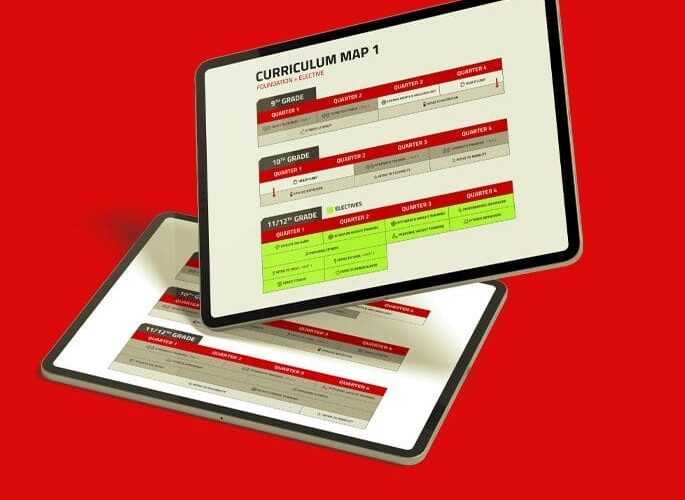
A scope and sequence is the backbone of any physical education curriculum guide. It ensures that skills are introduced in a logical order and built upon over time.
- Elementary (K–5): Focus on fundamental movement skills (running, jumping, throwing, catching), introductory games, rhythm and dance, and basic fitness concepts.
- Middle School (6–8): Introduce sport-specific skills, team strategies, fitness testing, and personal goal setting.
- High School (9–12): Emphasize lifelong fitness, specialized activities (yoga, weight training, outdoor pursuits), and leadership roles (peer teaching, officiating).
A well-designed scope and sequence prevents redundancy and ensures that students are not stuck playing dodgeball every year without progression. It also allows for vertical alignment across grade levels, making transitions smoother and more effective.
4. Implementing the Physical Education Curriculum Guide in Real Schools
Even the most beautifully written physical education curriculum guide is useless if it’s not implemented effectively. Success depends on teacher training, resource availability, administrative support, and student buy-in.
Teacher Training and Professional Development
Teachers are the frontline deliverers of any curriculum. A physical education curriculum guide must be accompanied by robust professional development opportunities.
- Workshops on new teaching models (e.g., Sport Education, Cooperative Learning)
- Training in inclusive practices for students with disabilities
- Instruction on using technology for assessment and feedback
- Peer observation and coaching programs
According to the CDC’s Physical Education Curriculum Analysis Tool (PECAT), schools with strong professional development programs report higher levels of curriculum fidelity and student engagement.
Overcoming Common Implementation Barriers
Many schools face challenges when trying to implement a comprehensive physical education curriculum guide. Common obstacles include:
- Limited time due to academic testing pressures
- Inadequate facilities or equipment
- Large class sizes
- Lack of administrative support
- Teacher turnover or lack of certification
To overcome these, schools can:
- Advocate for PE as a core subject, not an elective
- Seek grants or community partnerships for equipment
- Use modular scheduling to allow for longer PE blocks
- Engage parents and stakeholders through newsletters and events
- Integrate PE with other subjects (e.g., math in fitness tracking, science in heart rate studies)
5. Assessing Student Outcomes in the Physical Education Curriculum Guide
Assessment is a critical component of any physical education curriculum guide. It moves the program beyond “we played games today” to “we know what students learned and how they improved.”
Types of Assessment in Physical Education
Effective assessment in PE includes a mix of formative and summative tools, measuring both physical performance and cognitive understanding.
- Performance-Based Assessments: Skill rubrics, game play observations, fitness tests (e.g., PACER, curl-ups, push-ups).
- Knowledge Assessments: Quizzes on rules, strategies, anatomy, or nutrition.
- Self-Assessments: Student journals, goal-setting logs, reflection sheets.
- Peer Assessments: Structured feedback using checklists or rubrics.
For example, in a soccer unit, students might be assessed on dribbling technique (performance), understanding of offside rules (knowledge), teamwork during scrimmages (peer assessment), and personal improvement goals (self-assessment).
Using Data to Improve Instruction
Data from assessments should not just sit in a gradebook—it should inform teaching. A strong physical education curriculum guide includes protocols for analyzing student data and adjusting instruction accordingly.
- Identify class-wide skill gaps (e.g., poor passing accuracy) and re-teach concepts
- Group students by skill level for differentiated instruction
- Track individual progress over time using fitness portfolios
- Share data with students to promote ownership of learning
The SHAPE America Assessment Database offers free, downloadable tools aligned with national standards, making it easier for teachers to implement valid and reliable assessments.
6. Inclusion and Equity in the Physical Education Curriculum Guide
A truly effective physical education curriculum guide is inclusive by design. It ensures that all students—regardless of ability, gender, cultural background, or socioeconomic status—have equitable access to meaningful physical activity experiences.
Adapting for Students with Disabilities
Inclusive PE requires thoughtful planning and collaboration with special education staff. The curriculum guide should include specific adaptations and modifications.
- Use of adaptive equipment (e.g., beeping balls for visually impaired students)
- Modified rules or smaller playing areas
- Peer buddy systems
- Individualized Education Program (IEP) alignment
The Adapted Physical Education National Standards (APENS) provide a framework for ensuring that students with disabilities receive appropriate instruction and assessment.
Promoting Gender Equity and Cultural Responsiveness
Traditional PE programs have often favored male-dominated sports and Eurocentric activities. A modern physical education curriculum guide must challenge these biases.
- Offer co-ed and gender-neutral units (e.g., dance, yoga, rock climbing)
- Incorporate global games and cultural movement practices (e.g., capoeira, taiko drumming, traditional Indigenous games)
- Use inclusive language and avoid gendered assumptions (e.g., “athletes” instead of “boys and girls”)
- Ensure equal access to leadership roles and equipment
Research shows that culturally responsive PE increases student engagement and reduces dropout rates, especially among marginalized youth.
7. Evaluating and Updating Your Physical Education Curriculum Guide
A physical education curriculum guide is not a static document. It should be a living, evolving framework that responds to new research, student needs, and policy changes.
Conducting a Curriculum Audit
Regular audits ensure that the curriculum remains relevant and effective. Schools should conduct a formal review every 3–5 years using tools like the CDC’s PECAT.
- Assess alignment with current standards
- Evaluate student outcomes and engagement data
- Gather feedback from teachers, students, and parents
- Review inclusion and equity practices
- Check for integration of technology and innovation
The audit process should be collaborative, involving PE teachers, administrators, health professionals, and even students.
Integrating Emerging Trends and Technologies
The future of physical education is digital, personalized, and data-driven. A forward-thinking physical education curriculum guide must embrace innovation.
- Wearable fitness trackers (e.g., Fitbit, Polar) for real-time feedback
- Virtual reality (VR) for immersive fitness experiences
- Mobile apps for tracking activity, setting goals, and self-assessment
- Online learning modules for theory-based content (e.g., nutrition, injury prevention)
- Blended learning models that combine in-person and digital PE
For example, some schools now use platforms like Gopher PE to access digital lesson plans, assessment tools, and professional development resources that align with their physical education curriculum guide.
What is a physical education curriculum guide?
A physical education curriculum guide is a comprehensive, standards-based document that outlines the goals, content, instructional strategies, and assessment methods for a K–12 physical education program. It ensures consistency, quality, and alignment with national and state standards.
Why is a physical education curriculum guide important?
It provides a clear roadmap for teachers, ensures equitable access to quality PE, supports student learning and fitness outcomes, and helps schools meet accountability requirements. It also promotes program continuity and long-term planning.
How often should a physical education curriculum guide be updated?
Experts recommend reviewing and updating the guide every 3–5 years to reflect new research, standards, technology, and student needs. Regular audits using tools like the CDC’s PECAT can guide the revision process.
Can a physical education curriculum guide be used in homeschooling?
Yes, adapted versions of a physical education curriculum guide can be used in homeschool settings. Parents can use the scope and sequence, activity ideas, and assessment tools to create structured, age-appropriate physical activity plans for their children.
How does a physical education curriculum guide support student health?
By promoting regular physical activity, teaching fitness concepts, encouraging healthy behaviors, and integrating social-emotional learning, a well-designed guide helps students develop lifelong habits that support physical, mental, and emotional well-being.
Designing and implementing a powerful physical education curriculum guide is not just about meeting standards—it’s about transforming lives. From fostering physical literacy to promoting equity and innovation, this guide serves as the blueprint for a dynamic, inclusive, and future-ready PE program. By aligning with national standards, investing in teacher development, embracing assessment, and staying responsive to change, schools can ensure that every student has the opportunity to thrive through movement. The journey doesn’t end with a document—it begins with it.
Further Reading: